






Meet Randy Pineda: The Neighbor Helping Shape Champions Park From the Inside
Randy Pineda did not join the Champions Park HOA Board because he wanted to become president.
He joined because he wanted to have a say in what happened in the neighborhood where he and his wife were raising their family.
That decision eventually led to years of board service, several different HOA roles, major neighborhood improvement projects and, ultimately, the president’s seat. But the motivation behind it has remained fairly simple: Champions Park is home.
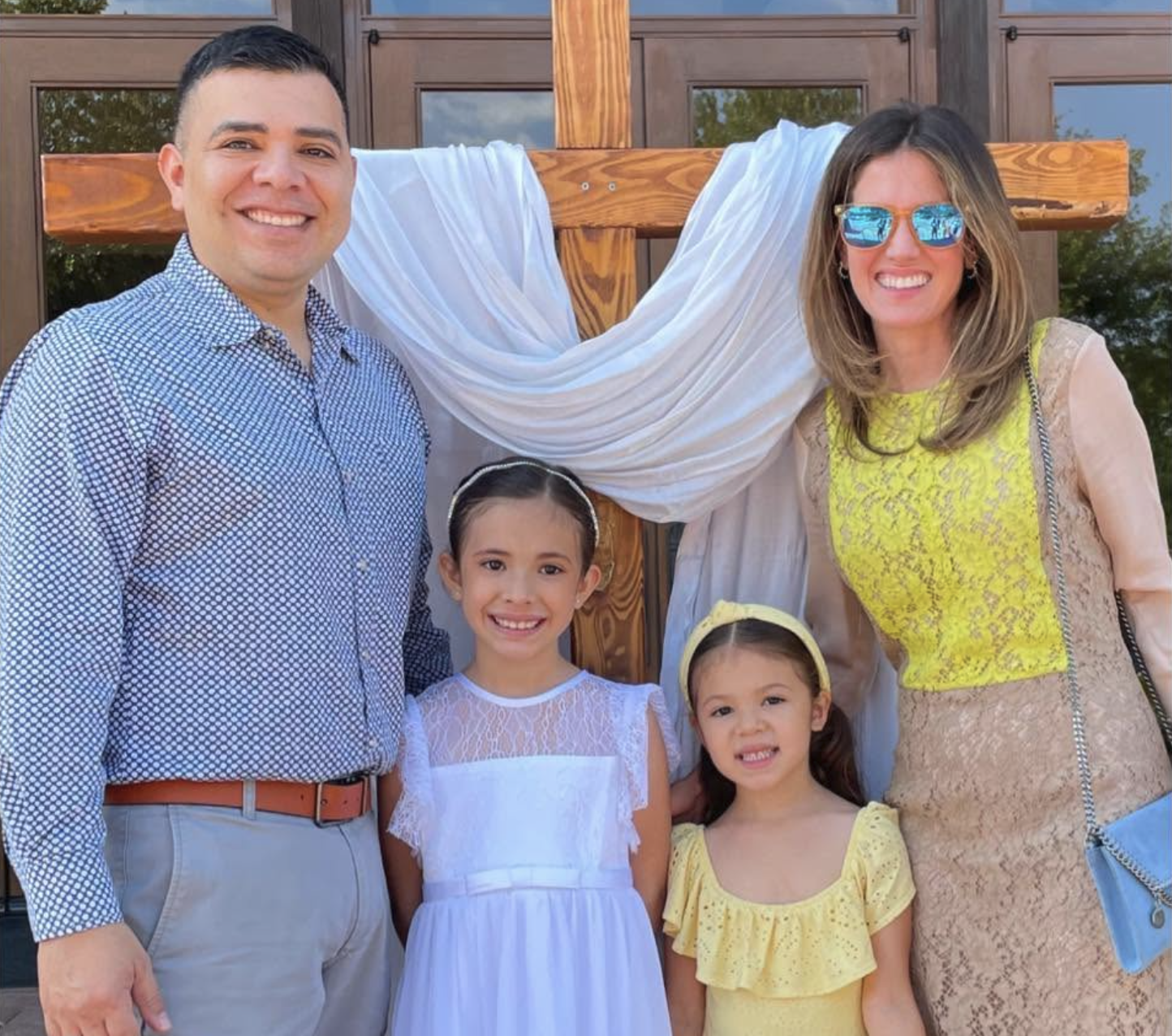
Pineda and his wife, his high school sweetheart, have lived in the Northwest Houston neighborhood since 2011. They are raising two daughters, now 12 and 8, and even after deciding to move into a different house in 2016, they chose to stay within Champions Park.
“The main reason I wanted to get involved with the HOA is because I wanted to get involved in making my community better. Seeing as we live in unincorporated Houston, I saw the HOA as the best way to have an impact on my neighborhood.”
Choosing Champions Park, Then Choosing It Again
Champions Park was originally a practical choice.
The neighborhood sat roughly between Pineda’s office in The Woodlands and his wife’s workplace near Beltway 8 and U.S. 290. Soon after moving in, Pineda began working from home, but by then the family had found other reasons to stay.
“The great value in the neighborhood, the nice yards and tree lined streets.”
When the family wanted a different home five years later, they moved within Champions Park rather than leaving it.
That choice helps explain why Pineda’s HOA service feels personal. The decisions made at the board table affect the same streets, amenities and common areas his own family uses.
From Science to HOA Leadership
Pineda spent roughly seven or eight years serving on the Champions Park HOA Board before becoming president, holding responsibilities that included deed restrictions, maintenance and serving as treasurer. After a two-year break, he returned and eventually took on the one major board role he had not yet held.
His professional background has helped shape the way he approaches the work.
Pineda studied microbiology, worked in pharmaceutical discovery and now works in clinical operations managing worldwide clinical trials. That experience in operations and project management helps him look at the HOA as a whole, from finances and maintenance to long-term planning and community events.
It also shapes the way he works with other board members. Pineda wants people to be heard, but he also wants fellow volunteers to have room to handle the responsibilities assigned to them. Rather than stepping into every task himself, he sees the board as a group of adults who should be empowered to carry out their own roles and be accountable for them.
Some of the projects he is most proud of began well before he became president.
Early in his board service, he led the redevelopment of the neighborhood park, replacing aging equipment and adding new playground features, tables and trash cans.
Later, during his final year as treasurer, the board created a five-year plan to replaster the community pool. After stepping away from the board for two years, Pineda returned in time to see that plan reach completion.
Those projects also reinforced something he believes residents may not always see: major HOA improvements can involve years of budgeting, planning and maintenance behind the scenes.
Listening, Explaining and Knowing Not Everyone Will Agree
Pineda has also learned that HOA leadership often means working through disagreement.
His approach is to let people speak before responding. When residents bring concerns, he has found that sometimes they need space to express their frustration before anyone starts talking about solutions.
That mindset proved useful during one particularly contentious deed restriction matter involving a homeowner and a legal issue. Pineda was able to step in, reduce the tension and help move the matter toward an amicable resolution.
He has also learned that some board decisions will never satisfy every homeowner.
When a decision may be controversial, Pineda believes residents deserve a clear explanation of how and why the board reached it. Even when people disagree, he has found that context can make the conversation more constructive.
That accountability matters even more because Champions Park operates with a fully resident-managed board.
The people overseeing the neighborhood are homeowners themselves. They pay the same dues, use the same amenities and live with the outcome of the decisions they make. Pineda sees that as a strength because every board member has a personal stake in the neighborhood.
The board has also been intentional about remaining resident-managed rather than turning operations over to a management company. Pineda said board members believe they can preserve a stronger level of service while keeping more control over how neighborhood dollars are spent.
Keeping an Older Neighborhood Strong
Champions Park’s age presents both challenges and responsibilities.
Pineda said the neighborhood can show its age in areas such as streets and signage, while common areas and infrastructure require continual attention. In an established neighborhood, maintenance is not a project that ever truly ends.
At the same time, the board works to enforce deed restrictions without becoming unnecessarily overbearing, maintain the community’s appearance and protect property values.
Financial discipline is another priority.
With costs rising, Pineda wants the HOA to remain in a strong financial position while keeping dues as manageable as possible and preparing for larger infrastructure needs in the years ahead.
His goal is to give residents strong value for what they pay, especially compared with surrounding neighborhoods, while making sure Champions Park has enough financial strength to handle future needs rather than simply reacting to problems as they arise.
When Residents Get Involved
Pineda is equally interested in building the social side of Champions Park.
He hopes to expand neighborhood traditions around Easter, Fourth of July, Halloween and Christmas while creating new social opportunities that give families more reasons to spend time together and get to know one another.
The neighborhood’s Fourth of July celebration is one example. The board partnered with a resident to organize what Pineda described as Champions Park’s largest fireworks show ever, and the event grew to include a parade and multiple activities throughout the day.
That expansion depended heavily on volunteers. Pineda said the event would not have been possible without residents stepping in to help, and as the HOA looks to grow these events, he hopes that participation grows with them.
A community garden followed a similar path. A resident brought the idea to the board, and within several months, it had moved from a suggestion at a meeting to plants in the ground. For Pineda, it is a good example of why he would like more homeowners to attend meetings, even if they simply want to listen, ask a question or share an idea.
He hopes more residents will feel comfortable walking into a meeting and becoming part of the conversation.
“Come on in!!! Even if it’s just to listen and see how the board operates.”
For Pineda, involvement does not have to mean running for the board. It can be as simple as attending a meeting, volunteering for an event or bringing forward an idea.
The Neighbor Behind the Title
Outside of HOA responsibilities, Pineda spends time with his wife and daughters, works on projects around the house and enjoys woodworking and 3D printing. He is also an avid Houston sports fan and loyal to Texas A&M, his university.
He is also a committed Trekkie. His favorite series is Star Trek: Deep Space Nine, and he estimates he has watched all 176 episodes about 15 times.
Those details may seem far removed from neighborhood governance, but they are also what make his role distinctly local.
The person discussing HOA finances or long-term maintenance at a board meeting is also a homeowner raising his family in the same community.
Looking Toward the Next 40 Years
Pineda wants Champions Park to be prepared for the long term.
That means addressing aging infrastructure, maintaining strong finances and keeping dues as low as reasonably possible while continuing to provide residents with meaningful value.
It also means preserving long-running traditions, adding new community events and building a neighborhood where people actually know one another.
When his time as president eventually ends, Pineda hopes residents remember him as calm, collected and cool under pressure, fair in the way he handled disagreements and unwilling to impose his own views simply because he held the president’s seat.
What matters more to him, though, is the kind of neighborhood Champions Park becomes over time.
Pineda and several fellow board members have talked about wanting to recapture some of the closeness they remember from the neighborhoods they grew up in, where people knew who lived nearby, waved to one another and felt comfortable asking a neighbor for help.
“We want to bring back that community vibe where you know you can count on a neighbor if you need help.”
That idea is also what makes the work rewarding for him. Over the years, Pineda has built friendships with fellow board members and watched long-term projects move from planning stages to finished improvements residents can actually use.
For someone considering HOA service for the first time, he sees that as part of the payoff. The work can take time, but it also creates opportunities to help friends and neighbors, meet new people and have a direct hand in shaping the place everyone shares.
For Pineda, that is really the thread connecting his years on the board. The park redevelopment, the pool planning, the neighborhood events, the finances and the push for more resident involvement all point toward the same goal: keeping Champions Park a place where families feel invested not only in their homes, but in one another.
It is the kind of neighborhood he and his wife chose to stay in, the place where they are raising their daughters, and the community he hopes will still feel connected decades from now.
Do you own a business?