






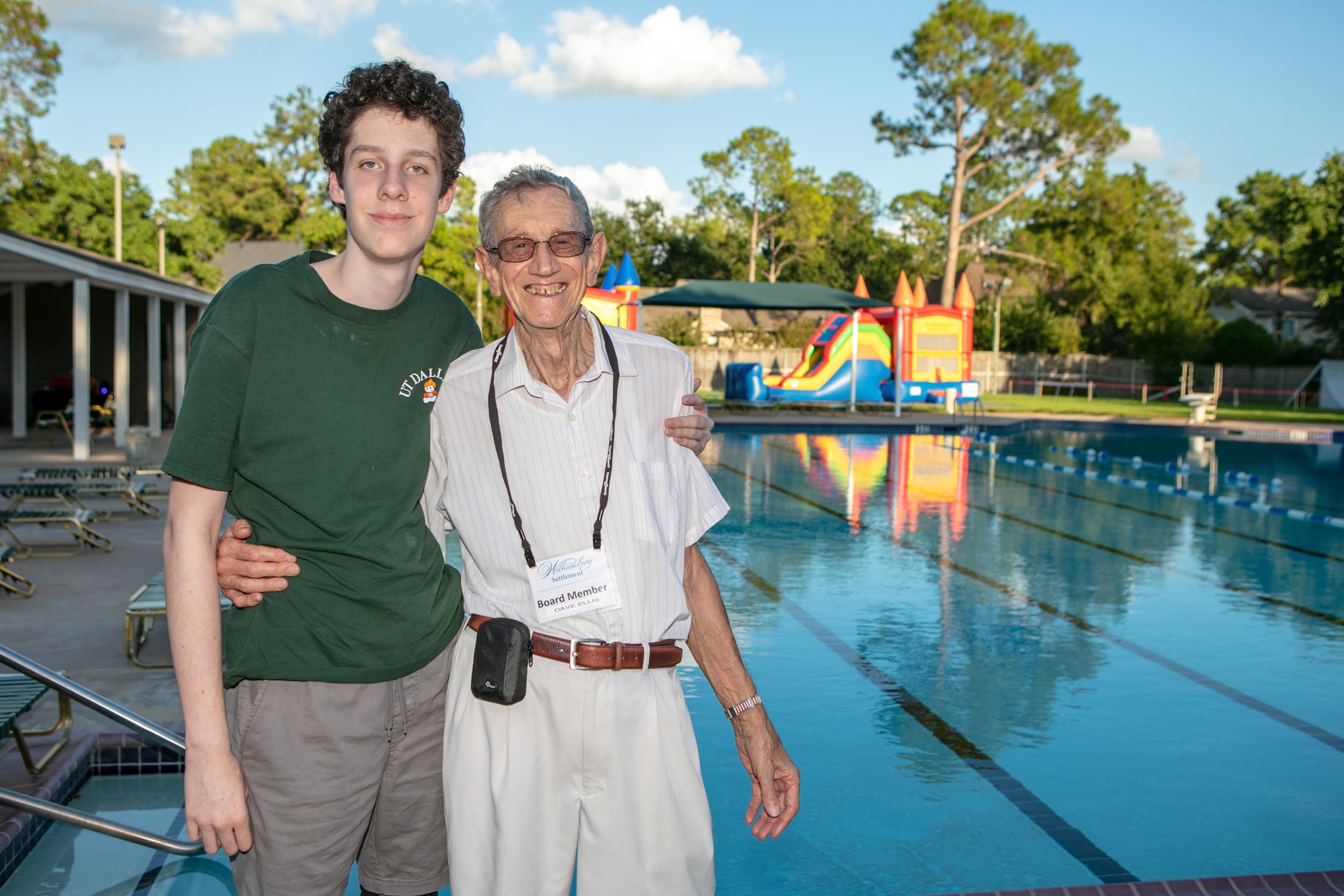
HOA Board Member Spotlight: Dave Ellis of Williamsburg Settlement in Katy
Long before Katy became synonymous with sprawling master-planned communities, resort-style amenities, and digitally connected neighborhoods, Williamsburg Settlement represented something relatively new for West Houston: a carefully planned suburban community designed around long-term neighborhood living.
Developed during the 1970s as part of Marvin Leggett’s ambitious vision for the “Williamsburg” communities, the neighborhood emerged during a period when suburban growth west of Houston was accelerating rapidly. Plans for the broader development reflected the optimism of the era, with residential sections, community amenities, and large-scale infrastructure intended to help shape the region’s future growth.
Nearly five decades later, Williamsburg Settlement still reflects many of the same foundational ideas that shaped early master-planned communities: protecting property values, maintaining neighborhood standards, fostering community identity, and creating a place residents are proud to call home.
But according to longtime Williamsburg Settlement HOA board member Dave Ellis, the way communities operate behind the scenes — particularly the relationship between HOA boards and professional management companies — has evolved dramatically over time.
When HOA Communication Was Far More Limited
Ellis, who currently serves as Secretary, Treasurer, and Webmaster for Williamsburg Settlement HOA, moved into his home in 1978 as one of the neighborhood’s earliest residents. Yet despite living there from the beginning, he admits he paid very little attention to the HOA for decades.
“It was 2003 when I first became aware of our HOA,” Ellis said. “Pretty sad, considering that I was the first person to move into my house when it was built in 1978.”
At the time, HOA communication looked very different than it does today. Many communities still relied heavily on mailed notices, occasional newsletters, and annual meetings to communicate with residents. Websites, resident portals, community apps, email alerts, and social media updates had not yet become standard tools for neighborhood operations.
Ellis says his perspective changed during a neighborhood meeting discussing the possible cancellation of recycling services — a conversation that exposed how disconnected many residents were from HOA activity happening around them.
Walking home afterward with a neighbor, Ellis realized the community needed a better way to communicate.
“What was needed to keep us residents aware of what was going on in our neighborhood was a website,” Ellis recalled.
That realization became the beginning of more than two decades of HOA service.
“As I had recently retired and had some time available, I volunteered to build one for the board and later was encouraged to run for a position on it at the next election,” Ellis said. “And as they saying goes, ‘the rest is history’!”
The Difference Between the HOA Board and the Community Management Team
As Williamsburg Settlement evolved, so did the complexity of operating an HOA.
What many homeowners may not fully realize, Ellis says, is that HOA boards and community management companies serve very different — but highly interconnected — roles.
HOA board members are residents elected by their neighbors to make decisions on behalf of the community. They help establish budgets, oversee policies, review major projects, make architectural decisions, and determine the overall direction of the association.
Community management teams, meanwhile, provide the operational structure that helps those decisions become reality. Management companies often assist with vendor coordination, financial reporting, resident communication, meeting logistics, compliance processes, recordkeeping, and guidance on legal or procedural matters.
For Ellis, one of the biggest changes over the years has been the level of professional support available to HOA boards today compared to earlier decades.
“In those days we were with a management company that didn’t offer any training, so becoming a board member and later an officer was an ‘on the job’ training situation and certainly not optimum,” Ellis said.
That lack of structure, he says, often made volunteer leadership more difficult than it needed to be. Residents serving on HOA boards frequently had to learn governance, budgeting, maintenance oversight, and procedural requirements as they went.
Today, Ellis says the relationship between HOA boards and management companies has become far more collaborative and professionalized.
“Fortunately, that is no longer the case with our current management company [Crest Management] and modern technology available, and residents who are elected to the board now have plenty of opportunity to quickly get up to speed if they are prepared to spend the time and effort to do so,” he said.
In many modern Houston-area communities, management companies now serve as an important source of operational continuity as volunteer board members rotate in and out over time. While boards establish priorities and make decisions, management teams help maintain consistency, institutional knowledge, and day-to-day execution.
The Fundamental Purpose Hasn’t Changed
Although technology, communication tools, and operational complexity have evolved significantly since Williamsburg Settlement was first developed, Ellis believes the underlying purpose behind HOA leadership has remained remarkably consistent.
Like many HOA communities across Texas, Williamsburg Settlement has occasionally faced the public misconceptions that often surround homeowners associations. But Ellis says his own experience serving alongside fellow board members has been rooted far more in stewardship than control.
“Although there may be a perception that HOAs are bad guys, (which certainly seems to be the view of some in the Texas Legislature!) with residents joining to give themselves power over their neighbors, this has certainly not been my experience over the last 20 or so years,” Ellis said.
Instead, he says most HOA volunteers simply care deeply about protecting and improving the neighborhoods where they live.
“The board members I have had the pleasure of working with, joined and volunteered their time because they had a genuine desire to make a difference in maintaining and improving their neighborhoods,” Ellis said.
That sense of stewardship connects closely to the deeper history of Williamsburg itself. Long before the area became a suburban neighborhood, the land surrounding Williamsburg Settlement was shaped by generations of farmers, settlers, railroad development, and Katy-area families building long-term roots in the region. Historical accounts describing the origins of Williamsburg point to longstanding traditions of land stewardship, innovation, and community-building stretching back more than a century.
Why HOA Leadership Still Matters in Modern Communities
As Katy and the greater Houston area continue adding new master-planned communities at a rapid pace, Ellis believes one lesson remains especially relevant: communities function best when residents stay involved.
From websites and digital communication tools to financial planning and neighborhood maintenance, the mechanics of HOA governance may look far different today than they did in the 1970s. But Ellis says successful communities still rely on the same essential partnership between engaged residents, volunteer leadership, and strong management support.
“From my perspective, being part of our HOA has, and continues to be, a very rewarding experience,” Ellis said. “Although I realize that the time demands of younger residents with employment and family responsibilities can be challenging, I strongly encourage the participation of those who can find the time to be involved.”
For Williamsburg Settlement, that involvement has helped carry the neighborhood through nearly 50 years of change — from one of Katy’s early master-planned communities to an established neighborhood navigating the modern realities of suburban growth, digital communication, and evolving resident expectations.
The tools may have changed.
The relationship between HOA boards and community management companies may have become more sophisticated.
But the core mission, Ellis says, remains the same: helping communities stay informed, connected, maintained, and positioned to thrive for the next generation of residents.